Welcome to my virtual portfolio. My works and work experience are varied, but they all pursue the same goal: To make a better tomorrow. Tap or click the tiles to learn more.
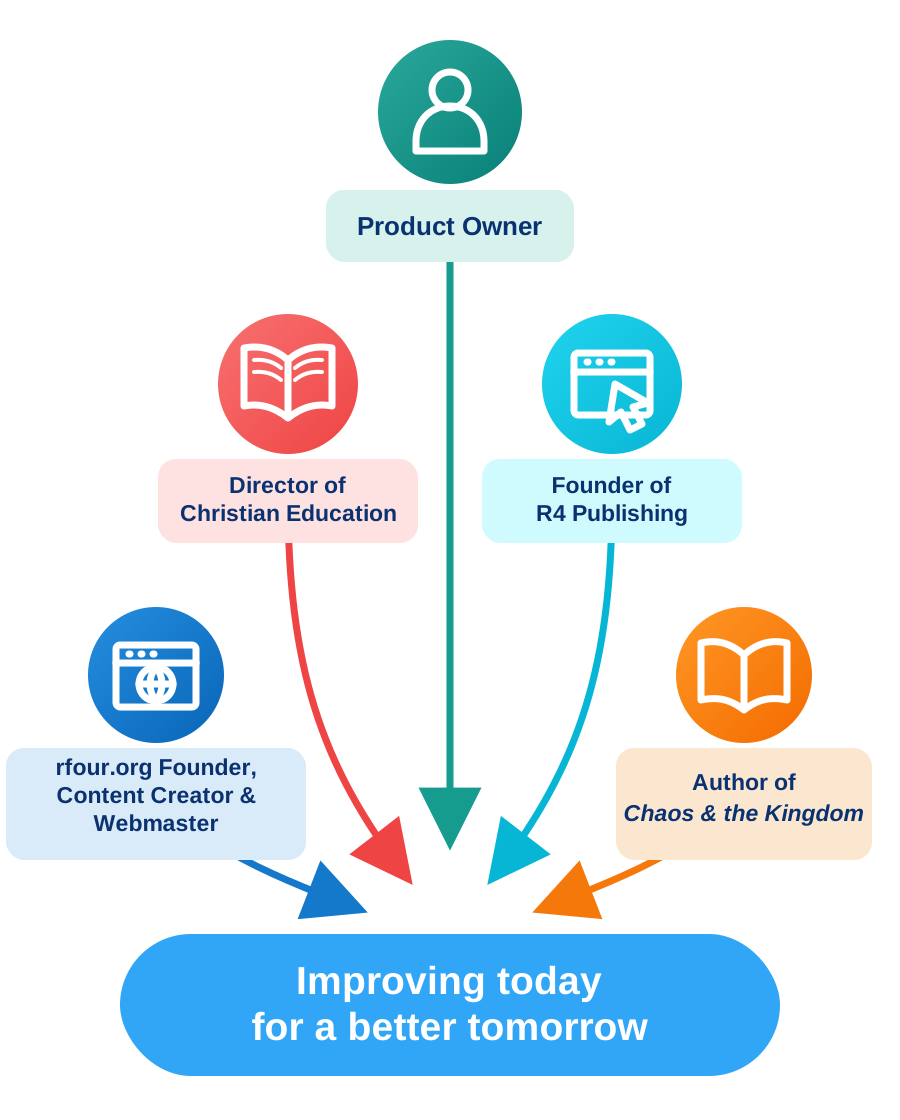


Welcome to my virtual portfolio. My works and work experience are varied, but they all pursue the same goal: To make a better tomorrow. Tap or click the tiles to learn more.
Over 1,000,000 unique monthly visitors have viewed rfour.org since I launched it in the fall of 2011!
I’m humbled by these numbers but also not too surprised. The most difficult task, by far, as a Director of Christian Education is constructing a curriculum from preschool through graduation that is only taught once a week by volunteers to a student-body whose attendance rates and beliefs vary wildly.
The content on the rfour.org site is primarily a by-product of the teaching content I created during my twelve years as Director of Child, Youth, and Family Ministries at various UCC churches as I sought to solve for that most difficult task. The site contains just over 200 lesson plans as well as 150 children’s sermons, some mission trip resources, content for a confirmation retreat, and a guide/script for a “No Rehearsal Christmas Pageant” worship service.
Each of these lessons, children’s sermons, and other available resources were created and used by me. And now, those same resources are available for others via the rfour.org site free of charge and free of ads.
There are two advantages that my lessons provide that other lessons weren’t providing at the time (and many still are not providing):
What happens when you apply the ancient, cross-cultural symbol for chaos (which is “water” or “bodies of water”) to six well-known Bible stories? A fresh and deeper understanding of the story emerges.
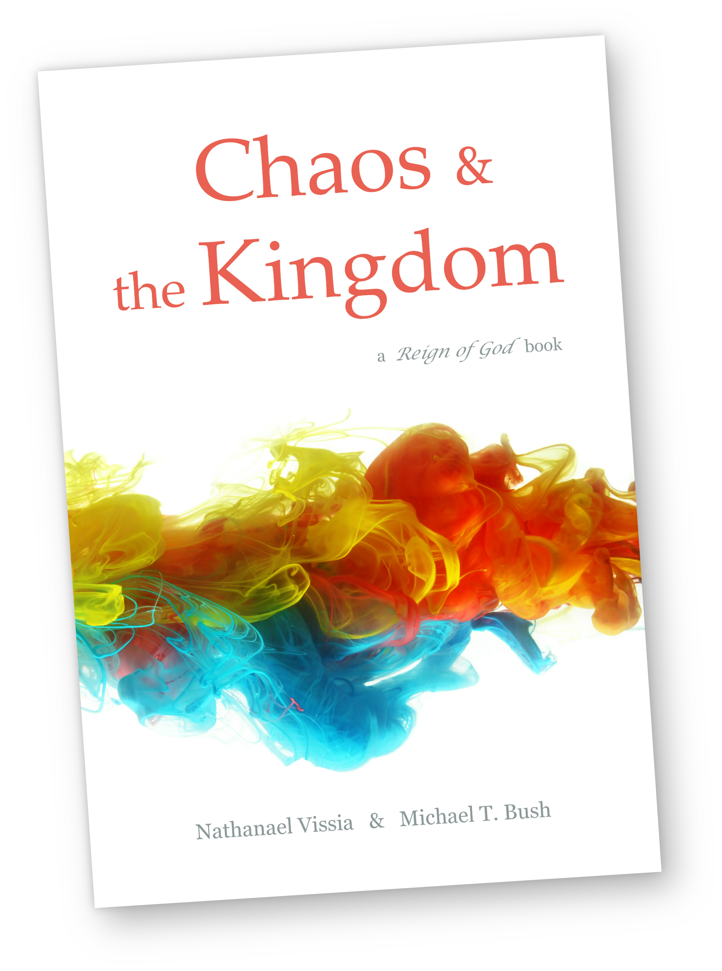
That is the premise of Chaos & the Kingdom. Written for small groups and individual readers alike, Chaos & the Kingdom is a dialogical exploration of six familiar Bibles stories where water as a symbol of chaos is included in the interpretation.
It’s a surprising and surprisingly fun read. You can learn more about it (and purchase it!) HERE.
Writing and self-publishing the book was a four year journey. Using the source material written by my co-author, I organized, edited, and rewrote his work to fit into a book format to be read and discussed by small groups. I had put a good year into writing it and thought I was making good progress. But as I would read through it to make sure the chapters were refined and referring to each other correctly, I was realizing something somewhat disturbing. A book with “Chaos” in the title should be at least a little riveting, right? Instead, it was a dry and dull book. Stunningly dull, actually. In my disappointment, I put the project to the side for a few months. When I came back to it, not only was it still boring, it also defied attempts to be less boring. No matter what I did, I couldn’t overcome the dullness of the thing.
One night, after rereading and re-editing for the upteenth time, my frustration boiled over and I started to write insults at myself in the margins. Once I got going, it was tough to stop. I was slinging some clever criticisms at my own writing and it was invigorating! No wonder there are so many critics – it’s fun!
The next day, though, as I reread my comments, I felt like my criticism was unfair. So I responded to some of my more aggressive comments. Mostly in a defensive way. But I tried to make my case.
And, thus, the dialogical style of the book was born.
Learning to use two voices was its own challenge. At first, the two voices argued too much. And then they agreed too much. Also, the second voice kept pulling the first voice off-topic. All of that, though, was fun and not boring. Eventually, I realized each voice was actually a character (the teacher and the skeptic) and my task, then, was to develop the characters (or not), as they moved through the book.
One of the things this world doesn’t need is more bad theology. Personally, I think the worst theology is the theology that thinks it is the correct one.
And, since Chaos & the Kingdom is, ultimately, a book of theology, I had a problem to solve: How to present theological material that didn’t present itself as the correct one.
By applying a second voice, a voice that poked at and challenged, I was able to present new ideas without equivocation (via the teacher voice) while giving the reader permission to question what was presented (via the voice of the skeptic).
The intended readers were church members in small study groups who were looking for another resource to read and discuss. The structure of each chapter was to help small group facilitators lead their group through each session (one session per chapter) including questions at the end of each chapter to encourage conversation. The book can still be read by an individual, but ultimately, the idea was for small groups to read the book and discuss it.
But, sometimes, you miss the mark. That’s what happened for me with the book because I didn’t appreciate how different the subject matter in the book was in relation to the makeup of small groups in churches.
Knowing what I know now, this book is for a very specific reader. It is for the individual who has a relationship with the divine but wants more, even to the point of being willing to re-think and re-arrange their understandings of the divine. While these individuals can be found in small groups, small groups are not comprised of a majority of these individuals.
In retrospect, with a different audience identified, I would have titled the book in a way that highlighted the result of the contents instead of the contents themselves, something like, “A new theology for believers who think something is missing” and would then market it accordingly. I would have also structured each chapter towards that type of reader instead of towards a reader in a small group.
I’m thankful for the experience of writing and publishing a book. So much of it was like moving a software project from idea to launch, but the work was all incumbent upon me: The identifying of ideas, the organizing of the ideas, the structuring of the book, the actual writing, the creative problem solving within the writing, the trial runs, the adjustments based on the feedback from the trial runs, the final editing, finding art for the cover, the process of self-publishing, the marketing, the actual selling of the book and everything else was, in its own unique way, exhilarating. If I hadn’t written book at this point in my life, I’d be very frustrated and disappointed with myself for not having written one, yet. However, now that I have written one, I’ll be quite content to never do it again! But, it might still happen. Sometimes, the power of expression overpowers the appreciation of free time.
I like to read, I like to solve problems, I like to support successful team endeavors, and I like to be understood.
These likes of mine provide a strong foundation in my work. Precise and clear communication is essential to a software product owner, a teacher, an author, a webmaster, and a small business owner. Team work, problem solving, and reading are as well.
But at the end of the day, if I have failed to provide tomorrow with needed opportunities to be a better day than today, then I’m dissatisfied. I used to think hard work, in and of itself, was valuable. But over time, for myself, I’ve realized that the value of hard work, the value of any work, is its intent to create a better tomorrow. Because, by bettering tomorrow, my efforts are also improving the current day.
That is the attitude and perspective at the heart of the works you can view in my virtual portfolio on my nathanael.org site. That is also the attitude and perspective you receive, every day, when you hire my business or hire me as your employee.
Interested? Let’s talk! What’s on your mind?
COMING SOON: We’re more than a quarter of the way through the 21st century. Can you tell by looking at your church’s website? Likely not if you belong to a smaller church. Budget and time crunches keep pushing the “refresh the website” to the middle of the “to do” list.
But now, you can refresh your church’s website in 4 easy steps with R4 Publishing. Once our first conversation occurs, then we’re on the clock and looking to have a new website available for you within three weeks. How do we do that? By modernizing the look and feel of your site and populating the new site with the information already on your current website.
And then, keep your site up-to-date using our R4 Publisher app which allows you to edit text, images, links, photos, and more. Finally, if you’re looking for a managed and snappy server to host your website? We can help you with that as well.
R4 Publishing is the cumulative result of my two seemingly opposite careers: Software and churches. I have twelve years of experience as a Director of Youth and Family Ministries, having served three different churches at various points during that time. And, I have 15 years and counting with product management in software. I know the resistance points with churches and their websites because I’ve dealt with them firsthand. I am also well-versed in designing processes that work for everyone involved with a software project while quickly producing desired results.
R4 Publishing services will be available by early 2027. However, don’t wait until then to check-in. Want to talk about your church’s website? Send me an email!